
Introduction
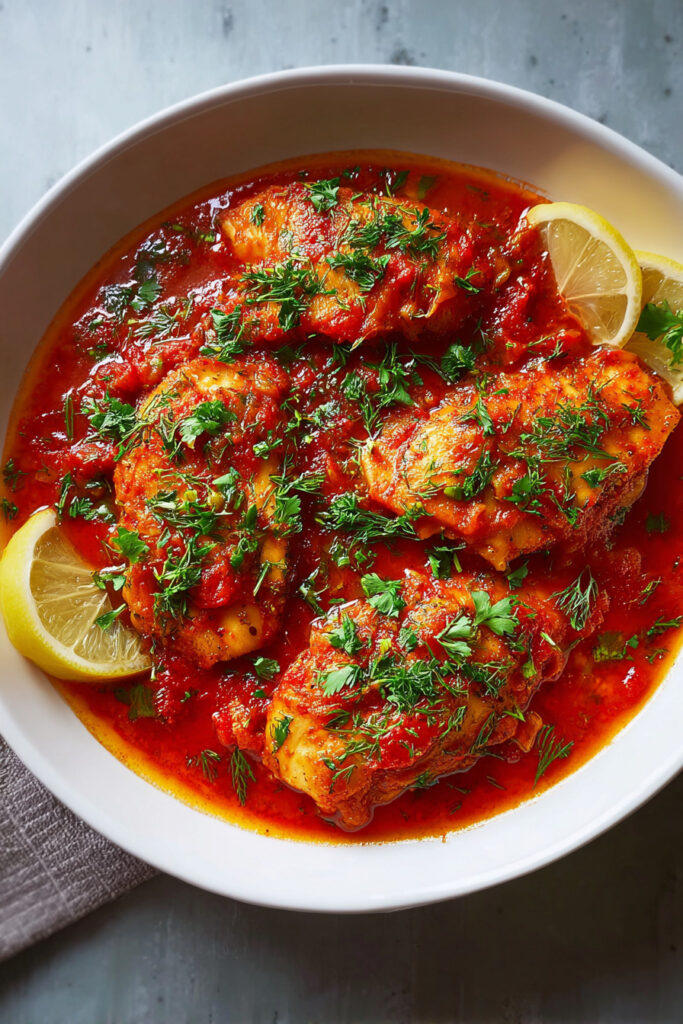
Welcome, dear food adventurers! Today, I’m thrilled to take you on a culinary journey to the Mediterranean coast — specifically to Libya — with a dish that’s as bold and heartwarming as its history: Libyan Aharaimi (Fish in Tomato Sauce).
When I first tasted this dish, I was visiting a friend from Tripoli who insisted we make it together. The kitchen was filled with the scent of garlic and paprika dancing in olive oil, and by the time the fish simmered gently in its spicy tomato bath, we felt like we were part of an old family tradition. It wasn’t just about the food — it was about community, heritage, and that magical moment when flavors tell stories.
Aharaimi (sometimes spelled Haraimi or Hraimeh) is a beloved Libyan Jewish and coastal Libyan recipe, often served at gatherings, Shabbat meals, or whenever there’s a desire for something fiery yet comforting. Its popularity lies in its simplicity and depth: juicy fish simmered in a deeply flavored red sauce elevated with garlic, cumin, paprika, and sometimes caraway. Recipe Wise+2Gather a Table+2
So, grab your apron, and let’s dive into making this soul-warming Libyan treasure!
Ingredients
Here’s what you’ll need to make a flavorful batch of Libyan Aharaimi (Fish in Tomato Sauce). I also include some substitution ideas so you can adapt it to your pantry or dietary preferences.
- Fish:
- ~1 kg firm white fish steaks or fillets (sea bass, grouper, halibut, or any mild, firm fish) Recipe Wise+2Dining and Cooking+2
- Olive oil: ~¼ to ⅓ cup (extra-virgin is ideal)
- Garlic: 4–8 cloves, finely chopped or crushed, depending on how garlicky you like it وصفة ماما+1
- Onion: 1 medium onion, finely chopped (yellow or white) Recipe Wise
- Tomato base:
- 2 large tablespoons tomato paste, plus
- ~250 ml passata or pureed tomatoes / tomato purée Recipe Wise
- Water: ~250 ml (or as needed to loosen the sauce) food.com
- Spices:
- 1 teaspoon sweet paprika
- ½ teaspoon hot paprika or harissa (or Kamoon Hoot, a traditional Libyan spice mix) Recipe Wise
- 1 teaspoon ground caraway (or cumin if you prefer) Gather a Table
- 1 teaspoon cumin (optional or paired with caraway) Gather a Table
- Salt to taste (start with ~½ teaspoon) Recipe Wise
- Lemon juice: Juice of 1 lemon (brightens the sauce) Recipe Wise
- Fresh herbs (optional): chopped parsley or cilantro for garnish
- Serving: Lemon wedges and, if you like a spicy kick, extra harissa or chili paste on the side Dining and Cooking
Substitution ideas:
- Healthier/light version: Use less oil or swap with a lighter olive oil.
- Lower sodium: Reduce added salt; rely more on herbs and lemon.
- Vegan twist: Instead of fish, you could use firm tofu or chickpeas, though this changes the character of “Aharaimi.”
- Gluten-free: Naturally gluten-free if your passata or tomato purée has no additives.
Step-by-Step Instructions
Here’s a clear, beginner-friendly way to make Libyan Aharaimi (Fish in Tomato Sauce) — with helpful tips along the way.
- Prep the fish
- Clean and pat dry your fish steaks or fillets. If they’re thick, cut into manageable, even pieces so they cook at roughly the same rate.
- Season lightly with a pinch of salt just before cooking.
- Sauté the aromatics
- In a large, heavy-bottomed skillet or saucepan, heat the olive oil over medium heat.
- Add the chopped onion and sauté until it becomes translucent and soft, about 5–7 minutes.
- Add the garlic and continue to sauté for another 1–2 minutes, until the garlic is fragrant but not burned.
- Build the sauce
- Stir in the tomato paste, mixing well so it dissolves into the onion-garlic mixture.
- Add the passata (or pureed tomatoes) and water, stirring to combine. If the mixture is very thick, add a little more water as needed.
- Sprinkle in your spices: sweet paprika, hot paprika (or harissa), ground caraway (or cumin), and salt. Stir until everything is well combined.
- Bring the sauce to a gentle simmer, then reduce the heat slightly and let it cook for 5–8 minutes, stirring occasionally, so the flavors meld and the sauce thickens slightly.
- Add the fish
- Carefully nestle the fish into the simmering tomato sauce. Try not to stir aggressively — you don’t want to break the delicate pieces.
- Cover the pan partially with a lid, leaving a small gap to allow steam to escape.
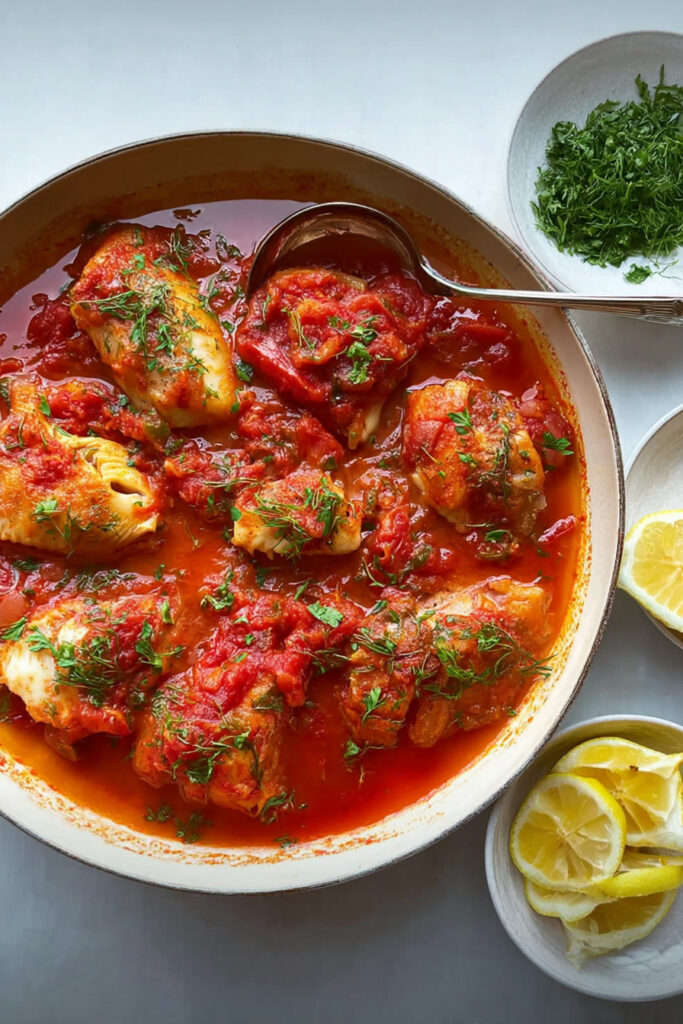
- Let the fish simmer for 10–15 minutes, depending on thickness, until the fish is opaque, flaky, and cooked through. The sauce should be glossy, well-seasoned, and slightly reduced.
- Finish with lemon
- Squeeze fresh lemon juice over the fish and gently swirl it into the sauce. This brightens and balances the rich tomato flavor.
- Taste and adjust seasoning: add more salt, paprika, or lemon if needed.
- Garnish and serve
- Transfer the fish and sauce to a serving dish. Garnish with chopped parsley or cilantro, and serve with lemon wedges on the side.
Extra Tips
Serving Suggestions
- Serve Libyan Aharaimi with fresh crusty bread — Libyan bread (or any good sourdough) is perfect for soaking up the spicy tomato sauce. Gather a Table
- Alternatively, enjoy it with couscous, rice, or a simple bulgur pilaf to make it a fuller meal. Dining and Cooking+1
- For an appetizer, you can serve smaller fish portions with a side salad and lemon wedges.
Storage & Reheating
- To store: Once cooled, transfer leftovers into an airtight container and refrigerate for up to 3–4 days.
- To reheat: Warm gently in a saucepan over low heat, stirring occasionally so the sauce doesn’t stick or burn. Add a splash of water if the sauce seems too thick.
- To cool: Let the sauce come to room temperature before sealing; this helps preserve the texture and flavor.
Variations & Swaps
- If you love extra spice, increase the harissa or hot paprika. For a smokier twist, use smoked paprika.
- Swap ground caraway with ground coriander or cumin if that’s what you have on hand.
- For a milder version, reduce the hot paprika and compensate with more sweet paprika.
- Add vegetables like bell peppers or roasted red peppers (like in some modern adaptations) for extra color and flavor. Dining and Cooking
Nutritional Information
Here’s an estimated nutritional breakdown for Libyan Aharaimi (Fish in Tomato Sauce), based on typical fish-in-tomato-sauce values. Nutrition Value
- Serving size: ~222 g (one portion)
- Calories: ~178 kcal
- Total fat: ~1.5 g
- Saturated fat: ~0.3 g
- Cholesterol: ~84 mg
- Sodium: ~777 mg (varies based on added salt)
- Carbohydrates: ~3.5 g
- Dietary fiber: ~0.9 g
- Sugars: ~2.4 g
- Protein: ~36 g
These values are approximate and will vary depending on the exact type of fish, the amount of oil, and how much water or tomato purée you use.
FAQ
How long does it take to make Libyan Aharaimi (Fish in Tomato Sauce)?
- Prep time: ~10 minutes (cleaning and seasoning the fish, chopping garlic and onion)
- Cooking time: ~20 minutes (sautéing, simmering, poaching the fish)
- Total time: Around 30 minutes, making this a fairly quick yet impressive dish.
Can I substitute [ingredient]?
- Fish: Yes — any firm white fish works. If you want something more budget-friendly, you could try firm tofu or chickpeas (though flavor and texture change).
- Spices: Don’t have caraway? Use cumin or coriander instead. No harissa? Substitute with hot paprika + a pinch of chili flakes.
- Tomato base: Use canned crushed tomatoes or pure tomato purée if you don’t have passata. Adjust water to maintain the right sauce consistency.
Can I freeze it?
- Yes, you can freeze leftovers. Let the stew cool completely, then transfer to a freezer-safe container.
- Freeze for up to 2 months. When ready to eat, thaw in the fridge overnight and reheat gently over low heat, stirring occasionally. Add a little water if needed to loosen the sauce.
Conclusion
And that, my friends, is how you bring a taste of coastal Libya to your own kitchen with Libyan Aharaimi (Fish in Tomato Sauce). It’s a dish that’s as rich in flavor as it is in tradition — aromatic garlic, warm paprika, tangy tomato, and delicate fish come together for something truly heartwarming.
I hope you’ll give this recipe a try, whether for a relaxed weekend dinner, a special gathering, or simply to explore a new corner of Mediterranean cuisine. If you make it, please come back and tell me: How did it turn out? Did you tweak the spices? What did you serve it with? Your feedback and stories always make my day.
Don’t forget to share the goodness — send this recipe to a friend who loves bold flavors, or save it for later in your recipe collection. And if you want more traditional Libyan recipes, just say the word — I’ve got plenty up my sleeve.
Happy cooking, and bismi Allah (in the name of God), may your kitchen be filled with warmth, flavor, and joy!