
Introduction
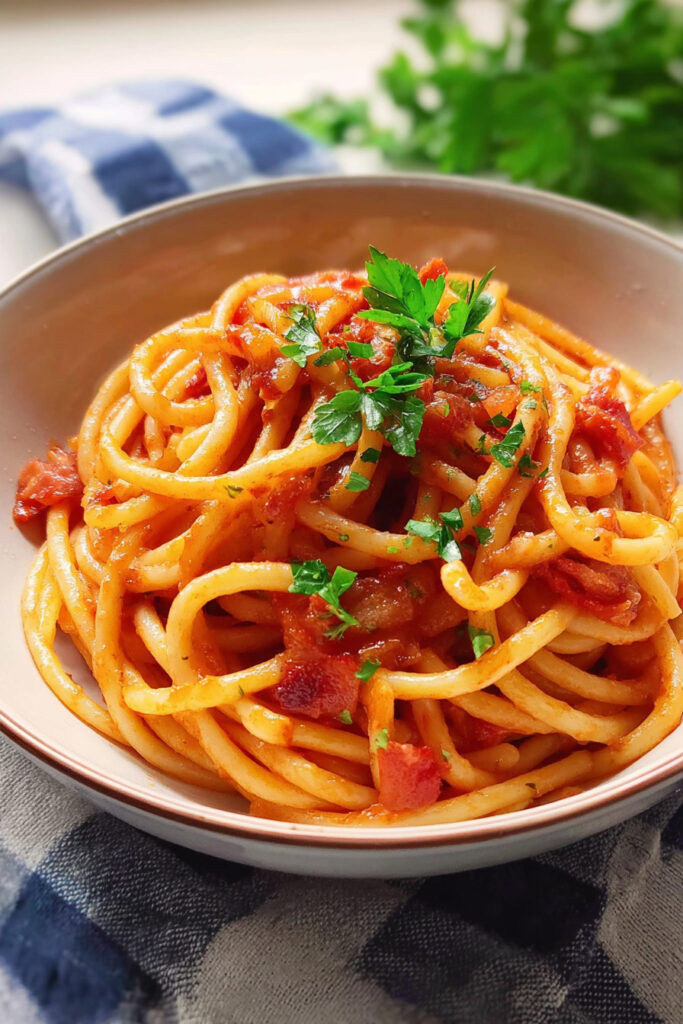
If there’s one dish that instantly transports me back to Italy, it’s Bucatini all’Amatriciana. Picture this: a cobblestone piazza in Rome, the chatter of locals in the background, and a steaming plate of pasta topped with a rich tomato and guanciale sauce right in front of you. Heaven, right?
The recipe hails from the small town of Amatrice, just northeast of Rome, and it’s become one of the cornerstones of traditional Roman cooking. What makes it so special? Three simple things: quality ingredients, straightforward technique, and that irresistible combination of salty pork, tangy tomato, and a touch of Pecorino Romano cheese.
The first time I made this dish at home, I was nervous—I mean, how could my little kitchen ever compete with the trattorias of Rome? But to my surprise, Bucatini all’Amatriciana is one of those recipes that rewards simplicity. If you respect the ingredients, you’ll get a pasta dish that feels both rustic and elegant.
So, let’s roll up our sleeves and recreate a taste of Rome in your very own kitchen!
Ingredients for Bucatini all’Amatriciana
The magic of this recipe lies in its simplicity. With just a handful of ingredients, each one has to shine.
Core Ingredients
- 12 oz (340 g) bucatini pasta (spaghetti works if you can’t find it)
- 5 oz (140 g) guanciale (cured pork cheek; pancetta is a good substitute)
- 1 can (14 oz / 400 g) San Marzano tomatoes, peeled and crushed
- ½ teaspoon red pepper flakes (optional, for heat)
- ½ cup Pecorino Romano cheese, freshly grated
- 2 tablespoons extra-virgin olive oil
- Salt, to taste
Ingredient Substitutions and Options
- Guanciale: Pancetta is the closest substitute. Bacon can work in a pinch, though it adds smokiness that isn’t traditional.
- Tomatoes: San Marzano are ideal for their sweetness and balance, but any high-quality canned tomatoes will do.
- Cheese: Pecorino Romano is essential for authenticity, but if unavailable, Parmesan can substitute (though it’s milder).
- Vegan Version: Use vegan bacon and nutritional yeast in place of guanciale and Pecorino.
- Gluten-Free: Swap in gluten-free spaghetti or bucatini.
Step-by-Step Instructions
Follow these easy steps to make an authentic Bucatini all’Amatriciana:
Step 1: Prepare the Ingredients
Slice the guanciale into thin strips. If you’re using whole canned tomatoes, crush them with your hands or a fork for a rustic texture. Grate the Pecorino Romano and set aside.
Step 2: Cook the Guanciale
In a large skillet, heat olive oil over medium heat. Add the guanciale and cook until golden and crispy, about 5–6 minutes. This step renders the fat, which becomes the flavor base of the sauce. Remove a few crispy pieces for garnish, if desired.
Step 3: Build the Sauce
Stir in the red pepper flakes (if using), then add the crushed tomatoes directly into the pan with the guanciale fat. Lower the heat and simmer for 10–12 minutes, stirring occasionally, until the sauce thickens slightly. Season with a pinch of salt (careful, as Pecorino is salty too).
Step 4: Cook the Pasta
Meanwhile, bring a large pot of salted water to a boil. Cook the bucatini until al dente according to package instructions. Reserve 1 cup of pasta water before draining.
Step 5: Combine Pasta and Sauce
Add the drained pasta directly into the skillet with the sauce. Toss everything together, adding small amounts of pasta water as needed to create a silky coating. Sprinkle in half of the Pecorino Romano and stir well.
Step 6: Serve and Enjoy
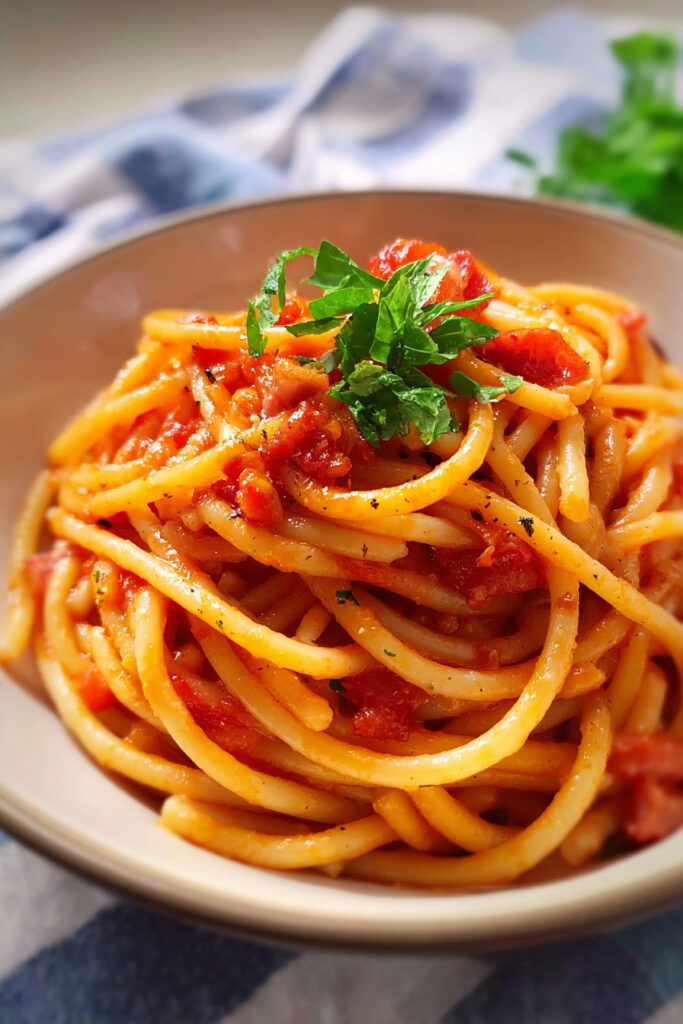
Plate the pasta, top with the reserved guanciale pieces, and finish with the remaining Pecorino Romano. Serve immediately with a glass of red wine, and enjoy a Roman feast at home!

Extra Tips for Perfect Bucatini all’Amatriciana
- Don’t skip the pasta water: The starchy water helps bind the sauce to the pasta, creating that irresistible glossy finish.
- Serving Suggestions: Serve with a crisp green salad, roasted vegetables, or a simple antipasto platter. A Chianti or Montepulciano wine pairs beautifully.
- Storage and Reheating: Store leftovers in the fridge for up to 3 days. Reheat gently in a skillet with a splash of water. The sauce may thicken, so loosen it with more liquid if needed.
- Variations: Some versions include onion, though purists often debate this. If you like sweetness in your sauce, sauté a small onion with the guanciale.
Nutritional Information
Based on Orsara Recipes, here’s an approximate breakdown per serving:
- Calories: ~480
- Protein: 16g
- Carbohydrates: 55g
- Fat: 20g
- Fiber: 4g
Frequently Asked Questions
1. How long does Bucatini all’Amatriciana take to make?
About 30 minutes total—perfect for a weeknight dinner or a weekend treat.
2. Can I substitute guanciale?
Yes. Pancetta is the best alternative, followed by bacon. Just remember that bacon’s smokiness changes the flavor.
3. Can I freeze Bucatini all’Amatriciana?
The sauce can be frozen for up to 2 months. Store it separately from the pasta for best results. Simply thaw and reheat, then toss with freshly cooked pasta.
Conclusion
There you have it—an authentic, flavorful plate of Bucatini all’Amatriciana, straight from the heart of Italy to your kitchen. I love this dish because it embodies the essence of Italian cooking: a few high-quality ingredients, treated with respect, creating something unforgettable.
Whether you’re making this for a quiet dinner at home or to impress guests, this recipe is a guaranteed hit. Try it out, take a picture, and let me know how it turned out in the comments below. And don’t forget to share this recipe with fellow pasta lovers—you never know who might be craving a taste of Rome tonight!
Buon appetito! 🍝🇮🇹