
Introduction
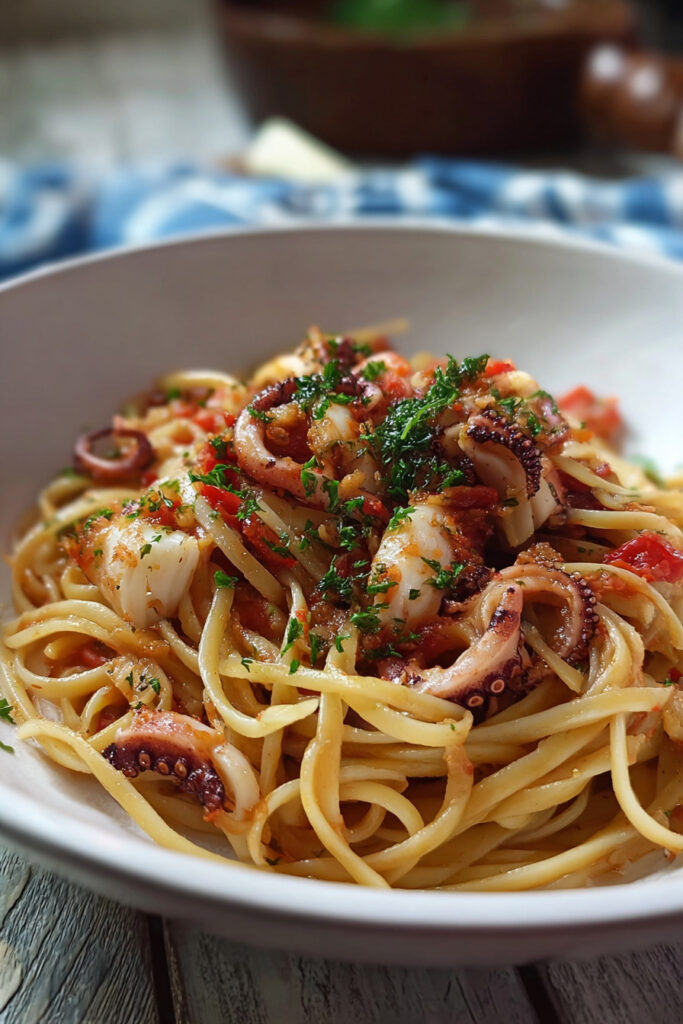
If there’s one dish that instantly transports me to the Italian coast, it’s Linguine with Calamari in Tomato Sauce. Imagine sitting by the water in a little trattoria, a plate of pasta steaming in front of you, the rich aroma of garlic and tomatoes mingling with the salty sea breeze. That’s exactly the vibe this recipe brings to your kitchen—no passport required!
I still remember the first time I made this dish at home. My uncle, who spent years in Naples, insisted that seafood pasta is meant to be “simple, fresh, and full of love.” He wasn’t wrong. With just a handful of good ingredients—ripe tomatoes, tender calamari, fresh parsley, and a splash of olive oil—you can create something that feels like a restaurant-quality meal but is totally achievable in your own kitchen.
Calamari sometimes gets a bad reputation for being “chewy” or “difficult to cook.” The truth? If you cook it quickly (or very slowly), it becomes tender and melt-in-your-mouth delicious. Pair it with al dente linguine and a garlicky tomato sauce, and you’ve got a dish that’s light, flavorful, and unforgettable.
Let’s get into it and make your new favorite seafood pasta: Linguine with Calamari in Tomato Sauce.
Ingredients
Here’s everything you need for this mouthwatering pasta dish, along with some substitution ideas to suit your preferences.
Main Ingredients:
- 1 pound linguine pasta
- 1 pound calamari (squid), cleaned and cut into rings
- 3 tablespoons extra virgin olive oil
- 3 cloves garlic, minced
- 1 medium onion, finely chopped
- 1 can (28 ounces) crushed tomatoes (or fresh ripe tomatoes, peeled and chopped)
- ½ teaspoon red pepper flakes (optional, for a little heat)
- 1 teaspoon salt (or to taste)
- ½ teaspoon black pepper
- ½ cup dry white wine
- Fresh parsley, chopped (about ¼ cup)
- Grated Parmesan or Pecorino Romano cheese (optional, though traditionalists often skip cheese on seafood pasta!)
Optional Substitutions:
- Gluten-Free: Use gluten-free linguine or spaghetti.
- Low-Carb: Swap pasta for zucchini noodles or spaghetti squash.
- Vegan Version: Replace calamari with sautéed mushrooms or artichoke hearts for a hearty alternative.
- Extra Flavor: Add olives, capers, or anchovies for a briny kick.
Step-by-Step Instructions
This recipe is straightforward and perfect for beginner and seasoned cooks alike.
Step 1: Cook the Linguine
Bring a large pot of salted water to a boil. Add the linguine and cook until al dente (about 9–11 minutes, or according to package instructions). Reserve 1 cup of pasta water before draining.
👉 Pro Tip: That starchy pasta water is gold—it helps the sauce cling beautifully to the linguine.
Step 2: Prepare the Sauce Base
While the pasta cooks, heat the olive oil in a large skillet over medium heat. Add the minced garlic and chopped onion. Sauté until the onion becomes soft and translucent, about 5 minutes.
Add the red pepper flakes (if using) and cook for another 30 seconds for that extra depth of flavor.
Step 3: Add Wine and Tomatoes
Pour in the white wine and let it simmer for 2–3 minutes until slightly reduced. Stir in the crushed tomatoes, salt, and pepper. Let the sauce simmer gently for 10–15 minutes to develop its flavor.
👉 Pro Tip: If you like a smoother sauce, you can blend the tomatoes before adding them.
Step 4: Cook the Calamari
Add the calamari rings to the simmering tomato sauce. Cook for just 2–3 minutes, until they turn opaque and tender. Overcooking will make them rubbery, so keep a close eye here!
Step 5: Combine Pasta and Sauce
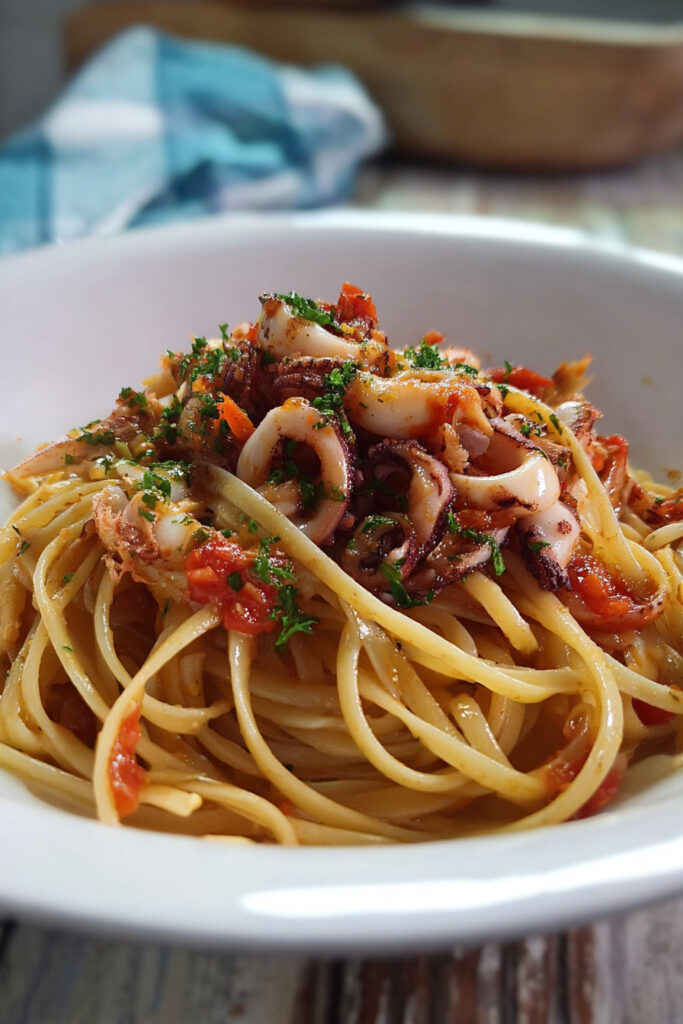
Toss the drained linguine into the skillet with the sauce and calamari. Add a splash of reserved pasta water if the sauce seems too thick. Mix well so every strand of pasta is coated in that savory tomato goodness.
Step 6: Garnish and Serve
Finish with a sprinkle of fresh parsley and a drizzle of extra virgin olive oil. Serve immediately with a wedge of lemon on the side.
Extra Tips
Serving Suggestions
- Pair with crusty Italian bread to soak up the sauce.
- Serve alongside a crisp white wine like Pinot Grigio or Sauvignon Blanc.
- Add a simple green salad with lemon vinaigrette to balance the richness.
Storage & Reheating
- Fridge: Store leftovers in an airtight container for up to 2 days.
- Freezer: While the sauce can be frozen for up to 2 months, it’s best to cook the calamari fresh, as it can become tough after freezing.
- Reheating: Warm gently on the stove over low heat, adding a splash of water to loosen the sauce.
Variations
- Spicy Lover’s Version: Add extra red pepper flakes or even a sliced chili.
- Garlic Lovers’ Dream: Double the garlic for a bolder flavor.
- Mediterranean Twist: Add kalamata olives and capers to the sauce.
Nutritional Information (per serving, about 4 servings)
- Calories: ~480
- Fat: 12g
- Carbohydrates: 68g
- Fiber: 6g
- Protein: 25g
(Adapted from Orsara Recipes)
FAQ Section
Q: How long does it take to make Linguine with Calamari in Tomato Sauce?
A: About 35–40 minutes total, including prep and cooking time.
Q: Can I substitute calamari with another seafood?
A: Yes! Shrimp, clams, or scallops work beautifully in this dish.
Q: Can I freeze this recipe?
A: The tomato sauce freezes well, but it’s best to cook the calamari fresh for the best texture.
Q: Should I use fresh or canned tomatoes?
A: Either works! Canned crushed tomatoes save time, but if you have ripe fresh tomatoes, they make the sauce taste even brighter.
Conclusion
There you have it—Linguine with Calamari in Tomato Sauce, a dish that combines the heart of Italian comfort food with the freshness of the sea. It’s elegant enough to serve at a dinner party yet easy enough to whip up on a weeknight.
This recipe is proof that simple ingredients, when treated with care, can create something truly magical. The tender calamari, the garlicky tomato sauce, and the perfectly cooked linguine all come together in harmony.
So, the next time you’re craving a seafood pasta that feels both special and approachable, give this recipe a try. I promise it’s one you’ll keep coming back to—just like I do!
👉 If you try this recipe, don’t forget to leave a comment below, share it with a friend, or tag me on social media. I’d love to see your version of this Italian classic!
Buon appetito! 🍝🐙