
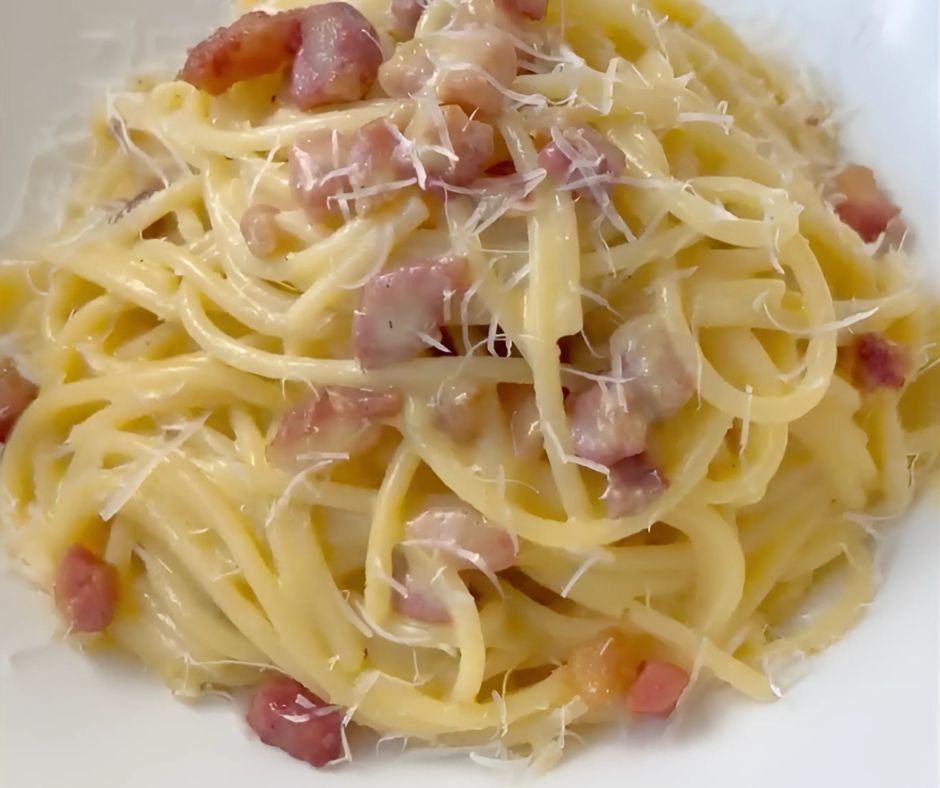
There’s something about Spaghetti Carbonara that feels like a warm hug. It’s rich but simple, indulgent yet elegant—and somehow always hits the spot. Whether you’re craving cozy comfort food or showing off your pasta skills, this Roman classic delivers every single time.
And here’s the kicker: despite its creamy texture, there’s no cream involved. That luscious sauce? It’s the magic of egg yolks, cheese, and just the right amount of pasta water.
In this post, I’ll walk you through the secret to achieving that restaurant-quality Carbonara right at home—no curdled eggs, no dry pasta, just silky, cheesy perfection every time.
A Little Carbonara History 📜🇮🇹
Let’s set the mood with a quick trip to Rome! Spaghetti Carbonara is believed to have originated in the mid-20th century in Italy, possibly as a post–World War II invention. Some say it was born when American soldiers brought bacon and eggs to Italy, and locals turned it into a pasta sauce. Others claim it evolved from the traditional “cacio e ova” (cheese and eggs) dishes of the Lazio region.
The name Carbonara may have come from “carbonari”—Italian coal workers—suggesting the dish was popular among laborers who needed a hearty, easy-to-make meal.
Wherever it came from, we’re just glad it exists.
Why Spaghetti Carbonara Is So Beloved
Here’s what makes Carbonara unforgettable:
- It’s deeply flavorful without being heavy
- Uses minimal ingredients (but they must be high-quality!)
- Ready in under 30 minutes
- Tastes like a five-star dish with minimal effort
And let’s not forget: it’s the ultimate date-night dinner or solo pasta party.
The Secret to Perfect Spaghetti Carbonara 🧑🍳
Now, before we dive into ingredients and instructions (psst—the full recipe is right here), let’s talk about the key to Carbonara success:
1. Use Room-Temp Egg Yolks
Cold eggs = scrambled disaster. Bring your yolks to room temperature so they blend smoothly into the sauce.
2. Choose the Right Cheese
Traditional Carbonara uses Pecorino Romano, but a mix of Pecorino and Parmesan makes the sauce extra rich and nutty. Freshly grated is non-negotiable.
3. Cook the Guanciale Low and Slow
Guanciale (cured pork cheek) is ideal for that authentic salty-fatty bite. If you can’t find it, pancetta is a great backup.
Start it in a cold pan—this renders the fat gradually and crisps up the meat perfectly without burning.
4. No Cream Needed!
Creamy Carbonara comes from:
- Fat from the guanciale
- Emulsification of pasta water
- Silky egg and cheese paste
Skip the cream carton—it’s not traditional, and honestly, you don’t need it.
5. Timing Is Everything
Remove your pan from the heat before adding the egg mixture. This step is crucial to avoid scrambled eggs and ensure the sauce turns out smooth and glossy.
Pro Tips for Mastering Spaghetti Carbonara
Want to take your pasta to pro level? Here’s how:
- Save more pasta water than you think you’ll need. It’s liquid gold.
- Use a mixing bowl to make your egg-cheese paste before tossing with the pasta. It ensures an even, smooth blend.
- Work fast once the pasta meets the sauce. The residual heat is just enough to cook the eggs safely while keeping the texture velvety.
🍝 Ready to make it yourself? Click here for the full step-by-step recipe!
Ingredient Quality Matters (Big Time)
Because Spaghetti Carbonara uses just a few ingredients, every single one has to shine.
Here’s what to look for:
- Pasta: Bronze-cut spaghetti holds sauce best. Al dente is the only way to go.
- Eggs: Use organic, pasture-raised eggs if you can. The yolks are richer and give the sauce a gorgeous golden color.
- Cheese: Skip the shaker bottle. Get a wedge and grate it fresh.
- Guanciale or Pancetta: The flavor foundation. Guanciale brings a buttery, umami-rich depth that’s hard to beat.
Frequently Asked Questions
Can I use bacon instead of guanciale?
Yes, but it won’t be quite the same. Bacon is smokier and contains added flavors. For the most authentic result, look for guanciale or pancetta.
What happens if I add the egg mixture to a hot pan?
You’ll end up with scrambled eggs. Always take the pan off the heat first and let it cool for a minute before adding the sauce.
How do I make Carbonara creamier?
Use more reserved pasta water, add it slowly, and mix quickly to help emulsify the sauce with the fat and cheese.
Let’s Talk Leftovers
Spaghetti Carbonara is best enjoyed fresh, but if you do have leftovers:
- Reheat gently in a non-stick skillet with a splash of water or milk
- Avoid microwaving—it can make the eggs rubbery
- Store in an airtight container in the fridge for up to 2 days
In Conclusion: A Simple Dish With Big Rewards
Spaghetti Carbonara is timeless. It’s elegant, comforting, and quick enough for weeknights while special enough for celebrations. Once you’ve nailed the technique, you’ll find yourself reaching for this recipe again and again.
So, what are you waiting for?
🍝✨ Click here for the full Spaghetti Carbonara recipe!
Bring a little Roman magic to your kitchen tonight. You’re going to love every creamy, cheesy bite.